From facial recognition to predictive policing, governments are gaining unprecedented tools of control faster than public awareness can keep up.
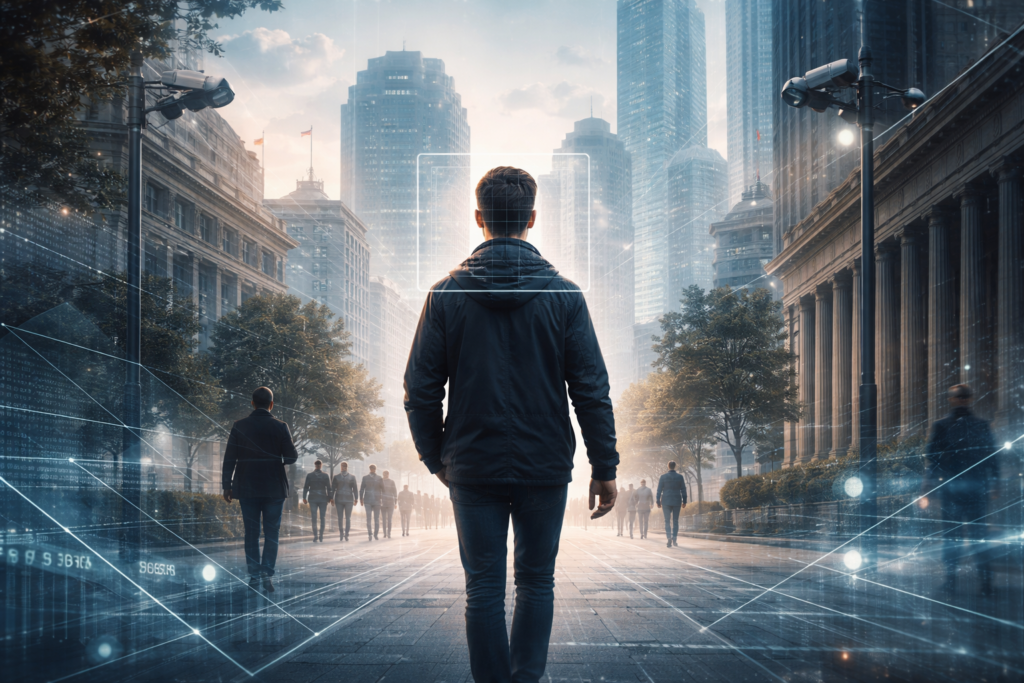
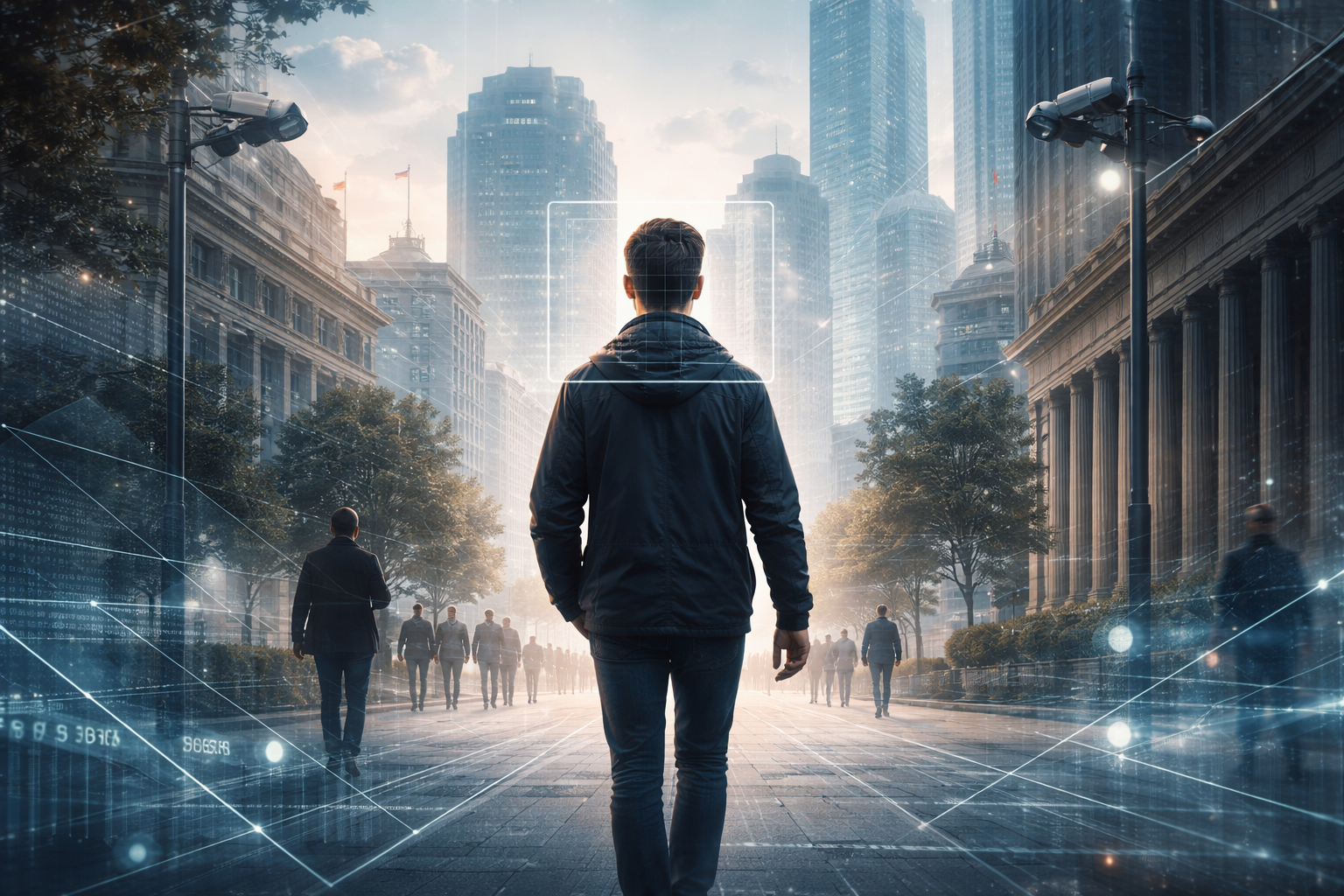
There is a scene that plays out millions of times every day across the world. Someone walks into a government office, applies for a benefit online, crosses a border, or simply walks down a busy street. They are not doing anything unusual. They are just living their life. But somewhere in the background, a system is quietly watching, assessing, and in many cases deciding — without anyone ever telling them it happened.
George Orwell imagined surveillance as something loud and visible. A screen, a voice, a watchful eye you could point to. What has actually arrived is far quieter and in many ways far more consequential. Power in the digital age does not announce itself. It works through the apps on your phone, the cameras above your head, the algorithms processing your data, and the automated systems deciding whether you qualify for a loan, a job, or public support.
This shift is not happening in some distant authoritarian state. It is happening in Washington and Wellington, in London and Lagos, in Berlin and Bangalore. It is happening inside the democratic societies that built their identities around the idea that power must always remain visible, accountable, and answerable to the people it governs.
The question worth asking is not whether this transformation is underway. It already is. The real question is whether anyone is paying close enough attention to what is quietly being lost.
How is AI surveillance reshaping democratic power?
AI surveillance is reshaping democratic power by moving consequential decisions — about benefits, bail, border crossings, and political information — away from accountable human beings and into automated systems most citizens never see. Governments and private tech companies now influence daily life through algorithms that operate silently, making democratic oversight significantly harder to exercise
How Governments Are Quietly Handing Decision-Making Power to Algorithms
Imagine receiving a letter telling you that your welfare payment has been stopped. You call the office. Nobody can explain why. You ask to speak to whoever made the decision. There is no whoever. A computer program assessed your file, flagged an anomaly, and closed your case. No human being reviewed it. No human being signed off on it. And there is no straightforward way to appeal to anyone who actually understands what happened.
This is not a hypothetical scenario. It has happened to thousands of real people across the United States, the United Kingdom, Australia, and New Zealand. And it is becoming more common, not less.
Governments did not hand power to algorithms overnight. It happened gradually and for understandable reasons. As populations grew, public services expanded, and administrative demands multiplied, governments faced a genuine problem of scale. Human decision-making is slow, inconsistent, and expensive. Automated systems are fast, consistent, and cheap. The efficiency argument was compelling and in many cases the efficiency gains were real.
So quietly, across Western democracies, computer programs began making decisions that used to belong to people. In the United States, predictive software now informs parole evaluations and law enforcement deployment. In the United Kingdom, automated systems assess welfare eligibility and flag potential fraud. In New Zealand, data-driven tools shape decisions across social assistance, healthcare, and taxation.
So quietly, across Western democracies, computer programs began making decisions that used to belong to people. In the United States, predictive software now informs parole evaluations and law enforcement deployment. In the United Kingdom, automated systems assess welfare eligibility and flag potential fraud. In New Zealand, data-driven tools shape decisions across social assistance, healthcare, and taxation.
The efficiency is real. But so is the problem. When a computer program makes the decision, the question of who is actually responsible when something goes wrong becomes surprisingly difficult to answer. And for the person on the receiving end of a wrong decision, that difficulty is not abstract. It is their rent, their food, their freedom.
From Emergency Measure to Everyday Reality: The Normalization of Digital Surveillance
Think about the last time you walked through an airport. Your face was scanned. Your bags were screened. Your passport was read by a machine before a human being ever looked at it. You probably did not think much about it. That feeling — of surveillance being completely normal, completely unremarkable — is itself one of the most significant shifts of the past two decades.
It was not always this way. For most of modern history, surveillance was selective. Governments monitored specific people for specific reasons. It required resources, justification, and in democratic societies, usually some form of legal oversight. Then came September 11, 2001. Within months, governments across the Western world introduced sweeping new surveillance powers justified by an extraordinary security emergency. Most citizens accepted the trade-off. The threat felt real. The measures felt temporary.
They were not temporary. The emergency powers became permanent infrastructure. The exceptions became the rules. And the technology kept advancing.
Today, facial recognition systems operate across public spaces in cities from London — one of the most surveilled urban environments on earth — to Sydney, Toronto, and Auckland. Metadata retention laws in Australia and the United Kingdom require phone and internet companies to store records of every call, message, and website visit for years. Software scans millions of communications records looking for unusual patterns, flagging ordinary citizens alongside genuine threats.
The scale of this shift becomes clearest when you look beyond Western democracies. In China, an extensive network of cameras, facial recognition, and AI-driven monitoring covers public spaces with a comprehensiveness that has no equivalent elsewhere. In Kenya and Nigeria, surveillance technologies are being rapidly deployed with minimal regulatory frameworks to govern how they are used or who they target.
What unites all of these examples is a single defining change. Surveillance no longer begins with suspicion. It begins with existence. You do not need to have done anything to be monitored. You simply need to be there.
Meanwhile the data being collected does not disappear. It accumulates, is stored, and may be used in ways that were never explained when it was gathered. That is the quiet bargain most people never agreed to and were never directly asked about.
How Big Tech Quietly Became More Powerful Than Many Governments
Think about the last time you read a news story, formed an opinion about a political candidate, or accessed a government service. Now ask yourself honestly — how many of those moments passed through a platform you did not choose, owned by a company you have never voted for, operating under rules you never agreed to?
For most people across America, Europe, Africa and Asia the honest answer is almost all of them.
As governments faced growing pressure to deliver faster, cheaper and more connected public services, they turned to private technology companies for help. The result is that today the digital infrastructure of modern democratic life — the cloud servers storing public data, the software making government decisions, the platforms where political conversation happens — is predominantly owned and operated by a handful of private corporations based mostly in the United States.
This arrangement has quietly relocated real power over information from governments to private companies. Social media algorithms decide which political messages reach which citizens. Search engines shape what people know and believe about public affairs. Recommendation systems determine which voices are amplified and which quietly disappear from public view. None of these decisions are made by elected representatives. They are made by engineers and executives optimising for engagement, revenue and growth.
In Germany and the Nordic countries governments have pushed back harder, investing in stronger public digital infrastructure and tighter regulatory frameworks. But across large parts of Africa the situation is particularly striking. Hundreds of millions of people access government information, political news and public services almost entirely through Facebook and WhatsApp — platforms governed not by local democratic institutions but by a private American corporation answering primarily to its shareholders.
Japan, despite being one of the world’s most technologically advanced nations, remains significantly dependent on foreign digital infrastructure for critical public systems — a dependency that carries its own quiet implications for national democratic sovereignty.
The line between a private platform and a public square has not blurred. For most practical purposes it has disappeared entirely.
The Hidden Truth About AI: Why Algorithms Are Never Actually Neutral
Most people have had the experience without quite naming it. A loan application rejected with no explanation. A job application that vanished into silence. A social media feed that somehow seems to already know what you are afraid of, angry about, or likely to buy next. These moments do not feel like coincidences. They are not.
There is a powerful and persistent idea in the digital age that technology is neutral — that computers simply process facts and produce objective outcomes. It is one of the most misleading ideas of our time.
Researcher Shoshana Zuboff spent years documenting how AI systems are built within economic models specifically designed to predict, influence and shape human behaviour — not simply to reflect it. Technology scholar Langdon Winner showed decades ago that political values and social priorities get quietly embedded into the design of systems long before those systems ever make a single decision. The tool is never just a tool. It carries the assumptions, priorities and blind spots of everyone who built it.
In the United States and United Kingdom credit scoring algorithms make decisions about who gets a mortgage, a car loan or a business opportunity. Those algorithms were trained on historical data — data that already reflected decades of systemic inequality. The result is that the computer reproduces the bias of the past with the appearance of mathematical objectivity.
In South Africa algorithmic systems used in financial and employment assessment have been shown to reflect inequalities rooted in the colonial era — inequalities that were never corrected in the data before the system was trained.
In New Zealand research has consistently shown that Māori communities are disproportionately affected by automated systems trained on data that inadequately represents their historical and social circumstances. In Australia Indigenous communities have faced similar outcomes from algorithmic welfare assessments.
The bias is rarely intentional. That is precisely what makes it so difficult to see and so hard to fix. When a human being makes an unfair decision you can challenge them. When a computer program does it the answer you receive is simply: that is what the data says.
AI, Elections and the Quiet Engineering of What Citizens Believe
Here is something most people do not realize about the last election they voted in. The political messages you saw — on your social media feed, in your search results, in the targeted content that kept appearing on your screen — were probably quite different from what your neighbor saw. Not slightly different. Completely different. Tailored specifically to your browsing history, your behavioral profile and the emotional triggers the data suggested would be most effective on someone like you.
This is not a conspiracy theory. It is simply how modern political campaigning works.
Political campaigns across the United States and Western Europe now routinely use detailed behavioral data — records of what you click, watch, share and search — to deliver precisely customized messages to specific groups of voters. The Cambridge Analytica case brought this into public view when it emerged that the personal data of tens of millions of Facebook users had been harvested and used to build detailed psychological profiles for political targeting. It was treated as a scandal. But the underlying practice it revealed has only grown more sophisticated since.
AI-generated political content, automated messaging at industrial scale and synthetic media that is increasingly difficult to distinguish from reality have made the information environment of democratic elections dramatically more complex and considerably harder to trust.
In the Philippines a coordinated social media disinformation campaign demonstrably shaped a national election outcome — showing that this is not exclusively a wealthy Western democracy problem. In Nigeria political misinformation spreading through WhatsApp networks reaches millions of voters in forms that no regulatory body has yet found an effective way to monitor or counter.
Algorithms did not create political manipulation. But they industrialized it. They made it faster, cheaper, more precise and almost completely invisible to the people it is being used on.
Democracy has always depended on two fragile conditions — that citizens have access to reasonably accurate information and that public debate remains genuinely open. Both of those conditions are now under quiet but serious pressure in ways that most voters never see and most governments have not yet figured out how to address.
The Uncomfortable Truth: Democratic Power Has Already Shifted — Most People Just Haven’t Seen It Yet
Here is something worth sitting with for a moment. Elections are still happening. Courts are still functioning. Parliaments are still meeting. On the surface democratic life looks remarkably intact. And in many important ways it is.
But the conditions under which those institutions operate have been quietly and fundamentally changed. And that distinction matters enormously. The shift that has taken place is not the dramatic kind that arrives with headlines and history books. It is the quieter and in many ways more consequential kind — the kind where the rules of the game change while everyone is still playing by the old ones.
Power has migrated. Not from democracy to dictatorship. But from deliberation to design. From visible public institutions to invisible private systems. From decisions made by people you could identify and hold responsible to outcomes produced by software that classifies, assesses and decides at a scale no human institution ever could.
When power is embedded in a platform, a default setting or an algorithm it no longer needs to justify itself. It simply functions. People comply not because they were forced to but because the system makes compliance feel like the only natural option available.
This is happening across America, Western Europe, Australia and New Zealand. It is accelerating across Asia and Africa. In Singapore highly efficient algorithmic governance raises persistent questions about where efficiency ends and civil liberty begins. In Rwanda sophisticated digital infrastructure has normalized levels of monitoring that would have seemed remarkable a generation ago.
The greatest threat to democratic power today is not a dramatic authoritarian seizure. It is the quiet erosion of meaningful participation through systems so deeply embedded in daily life that most people have simply stopped noticing they are there.
Citizens in the Algorithmic Age: What Rights Do People Actually Have
Imagine being told you no longer qualify for financial support. No letter explaining why. No person to call. No clear process to appeal. Just an automated notification and a closed door. This is not a hypothetical scenario. It has happened to real people in the United Kingdom, the United States, Australia and New Zealand. And the experience is becoming more common not less.
The fundamental problem is straightforward. The rights frameworks that democratic societies built over generations were designed around human decisions made by accountable people within visible institutions. They were simply never designed for a world where a computer program classifies millions of people simultaneously according to criteria the public never approved and often cannot even access.
In the United States legal frameworks are struggling to address AI-driven discrimination in housing, employment and criminal justice because the discriminatory mechanism is buried in data and design rather than in any identifiable human intention. In the United Kingdom legal challenges to automated welfare and immigration decisions have repeatedly exposed how little meaningful recourse citizens actually have when algorithms produce harmful outcomes.
In India millions of citizens have faced exclusion from basic government services through errors and rigidities in the Aadhaar biometric system — with limited legal pathways available to challenge automated decisions. In Ethiopia digital identity systems are being introduced with minimal rights protection frameworks in place to safeguard citizens from the consequences of automated error.
What is emerging in response is the idea of digital citizenship — the recognition that people need a new set of rights matched to the world they actually live in. The right to a clear explanation when a computer makes a decision about your life. The right to have an actual person review that decision. The right to understand the criteria being used to assess you.
Without these protections the formal rights that democratic societies proudly guarantee risk becoming quietly meaningless for anyone whose access to opportunity is mediated through systems they cannot see, question or challenge.
Key Insights
AI surveillance has moved from an exceptional security measure to permanent everyday infrastructure across democratic societies on every continent — most citizens never noticed the transition happening.
When computer programs make government decisions the traditional mechanisms citizens use to question, appeal or challenge those decisions simply stop working as designed.
Large technology companies now exercise more practical control over democratic information environments than most elected governments — not through force but through the platforms and systems everyone depends on daily.
Bias in AI systems is usually structural and unintentional — built into data and design before any decision is ever made — which makes it significantly harder to identify and considerably harder to fix.
Citizens across Western democracies, Asia and Africa increasingly share the same fundamental problem — automated systems making consequential decisions about their lives with no accessible or transparent path to challenge or appeal.
Frequently Asked Questions on Rise of AI Surveillance
What is AI surveillance and how does it affect everyday life?
AI surveillance refers to the use of artificial intelligence to monitor, assess and make decisions about people through cameras, data collection and automated systems. It affects everyday life through facial recognition in public spaces, automated decisions about benefits and loans, and algorithms that shape the political and commercial content people see online every day.
Why are governments using algorithms to make decisions about citizens?
Governments adopted algorithmic decision-making primarily to manage growing administrative complexity more efficiently and at lower cost. Automated systems can process thousands of cases simultaneously in ways human staff cannot. The trade-off is that speed and scale come at the expense of transparency, individual consideration and meaningful accountability when things go wrong.
How does social media influence what people believe about politics?
Social media platforms use algorithms optimised for engagement rather than accuracy. Political content that triggers strong emotional responses spreads faster and reaches more people regardless of whether it is true. Combined with targeted political messaging based on detailed behavioral profiles this creates information environments that can be significantly different for different citizens even within the same democratic society.
Can ordinary people protect themselves from AI surveillance?
Partially. Encrypted messaging, privacy-focused browsers and careful management of app permissions offer some protection. However digital surveillance is now so deeply embedded in everyday services — banking, transport, healthcare, social media — that complete avoidance is practically impossible for most people without significant exclusion from normal economic and social life.
What rights do citizens have when an algorithm makes a decision about them?
Currently very limited rights in most countries. Some regions, particularly the European Union, provide partial rights to explanation and human review under data protection law. But in most democratic societies the legal frameworks have not kept pace with the speed of algorithmic deployment leaving citizens with few practical tools to challenge automated decisions that affect their lives.
Power Has Not Disappeared — It Has Simply Learned to Work in Silence
Somewhere right now an ordinary person is going about an ordinary day. They are commuting, shopping, scrolling, applying for something, crossing a border or simply walking down a familiar street. They are not thinking about algorithms or surveillance or democratic power. They are just living.
And yet invisible systems are quietly present in almost every one of those moments — assessing, classifying, deciding and shaping the conditions of their life in ways they will likely never fully see or know.
This is not the story of democracy collapsing. It is the story of something more subtle and in many ways more significant — the story of how power changes its shape while everyday life continues to feel entirely normal.
The societies that built their identities around visible, accountable and answerable power now govern through systems that are largely invisible, difficult to question and increasingly accepted as simply the way things are.
Perhaps the most important question of the democratic age is not who holds power. It is whether power can still be seen at all — because power that cannot be seen can never truly be held to account.
Global Transformation Magazine Decoding Today’s Trends, Navigating Tomorrow.
Part of our Global Trends and Transformation series — analytical perspectives on the forces reshaping the twenty-first century world.